
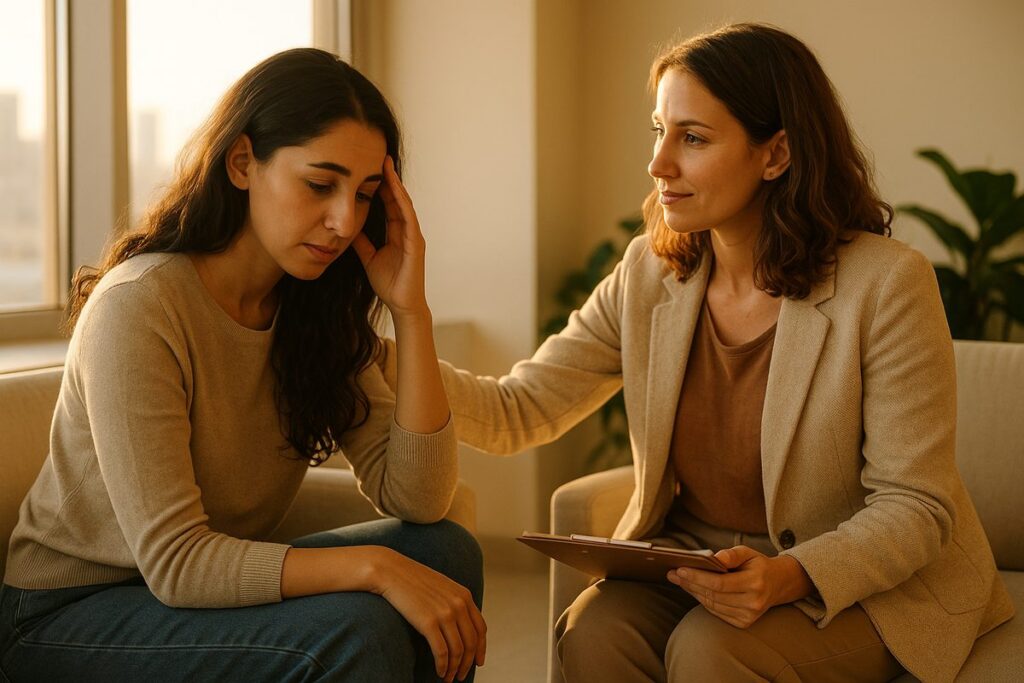
Trauma, Mental Health, and Addiction in Jewish Women: How Integrated Treatment in Florida Helps
Trauma, mental health conditions, and addiction rarely exist in isolation. For many women, they form an interlocking pattern in which each condition reinforces the others, making it nearly impossible to address one without attending to the rest. Ikann Wellness is a women-only mental health and addiction recovery center in Fort Lauderdale, Florida, offering Partial Hospitalization Programs (PHP), Intensive Outpatient Programs (IOP), dual diagnosis treatment, and trauma-informed therapy, including EMDR. This article explores the specific ways that trauma, mental health, and addiction interact in Jewish women's lives, why culturally sensitive integrated treatment matters, and what that care actually looks like in practice at a program designed for women like you.
The Three-Way Relationship Between Trauma, Mental Health, and Addiction
Understanding why so many women enter treatment with more than one diagnosis begins with understanding how the three conditions reinforce each other.
Trauma, whether from a single catastrophic event or from chronic exposure to stress, loss, or abuse, changes the way the nervous system functions. The brain's threat-detection systems become hyperactivated. Sleep is disrupted. Emotional regulation becomes harder. The body holds onto the experience in ways that thought alone cannot resolve.
Mental health conditions like depression, anxiety, and post-traumatic stress disorder often follow from unprocessed trauma. And substances, whether alcohol, prescription medications, or other drugs, offer a temporary and imperfect way to manage the symptoms that trauma and mental illness produce. The relief is real, which is exactly what makes substance use so compelling for women who have not yet found another way through.
Why Treating One Condition in Isolation Does Not Work
A program that addresses only the substance use, without treating the underlying trauma or the co-occurring mental health condition, leaves the primary driver intact. The woman may stop using substances during treatment, but returns home to the same nervous system, the same unprocessed memories, and the same emotional patterns that made substances feel necessary in the first place.
This is why relapse rates are significantly higher for people with co-occurring disorders who receive single-focus treatment. According to SAMHSA, individuals with co-occurring mental health and substance use disorders require integrated treatment that addresses both conditions simultaneously to achieve the best outcomes.
Integrated treatment means that the trauma specialist, the addiction counselor, and the psychiatrist or mental health prescriber are all working from the same clinical picture and coordinating their approaches rather than each treating a separate piece of the same person.
Trauma in Jewish Women: What Makes It Different?
Every woman's trauma is her own. But there are patterns specific to Jewish women's experience that a culturally sensitive treatment program will recognize and address without requiring a woman to explain them from scratch.
Historical and Intergenerational Trauma
Jewish identity carries the weight of collective historical experience. For many Jewish women, the Holocaust is not an abstraction. It lives in family stories, in the absence of relatives who never survived, in the anxiety that was transmitted across generations without ever being named as such. Research in epigenetics and intergenerational trauma transmission has begun to document what Jewish communities have long understood: that the effects of mass trauma do not end with the generation that experienced it directly.
Intergenerational trauma does not cause addiction, but it can create a baseline level of unresolved grief, hypervigilance, and disconnection that makes other stressors harder to absorb and substances more appealing as a management tool.
Community Stigma and Silence
Jewish communities, like many religious communities, can carry cultural expectations about resilience, achievement, and the management of difficulty within the family or through religious observance. These expectations are often loving in origin, but they can make it harder for a woman to name what she is experiencing as a clinical problem requiring professional help.
When a woman has absorbed the message that her struggles reflect poorly on her family or her community, she may spend years managing symptoms in ways that look functional from the outside while the internal reality deteriorates. By the time she seeks treatment, the clinical picture is often more complex than it would have been had she reached out earlier.
Sexual and Relationship Trauma Within Religious Contexts
Domestic violence, sexual abuse, and coercive control occur in religious Jewish communities as they do in every community. The presence of religious authority and community pressure can make disclosure feel especially risky, and the mechanisms for seeking help outside the community can feel disloyal or shameful.
Women who have experienced trauma in these contexts need a treatment environment in which they can speak about their experiences without feeling that doing so requires them to denounce their faith or their community as a whole. A skilled clinician working in a culturally informed framework can hold the complexity of a woman's experience, her genuine attachment to her faith and community alongside the real harm she has experienced, without asking her to simplify it.
What Integrated Treatment Looks Like at Ikann Wellness
Integrated treatment at Ikann Wellness begins with a comprehensive clinical assessment that looks at the full picture: substance use history, mental health history, trauma history, current stressors, family dynamics, and cultural or religious context. The goal of that assessment is not to label a woman but to understand her well enough to build a treatment plan that actually fits.
Trauma-Informed Therapy
Trauma-informed therapy means that every aspect of the clinical environment is designed with an understanding of how trauma affects the nervous system, behavior, and trust. This includes the physical environment, the way groups are facilitated, the way individual sessions are structured, and the way staff respond when a woman is struggling.
EMDR (Eye Movement Desensitization and Reprocessing) is one of the most well-researched evidence-based treatments for PTSD and complex trauma. It works by processing traumatic memories in a way that reduces their emotional charge, allowing the brain to store them as past events rather than active threats. At Ikann Wellness, EMDR is available as part of our programs for women whose trauma responses are contributing to their substance use or mental health challenges.
DBT (Dialectical Behavior Therapy) builds concrete skills for emotional regulation, distress tolerance, interpersonal effectiveness, and mindfulness. It was developed specifically for people who experience intense emotions and is particularly effective for women with histories of trauma who have developed reactive coping patterns.
CBT (Cognitive Behavioral Therapy) helps women identify the thought patterns that maintain depression, anxiety, and addictive behavior, and replace them with more accurate and adaptive ways of interpreting experience.
Dual Diagnosis Care
At Ikann Wellness, dual diagnosis treatment means that psychiatric support, including medication evaluation and management where appropriate, runs alongside addiction treatment rather than being sequenced after it. A woman does not have to choose between getting her mental health treated and getting her addiction treated. Both happen within the same program, with the same clinical team communicating across disciplines.
This matters particularly for Jewish women who may have previously tried to manage anxiety, depression, or trauma symptoms through medications prescribed by their family physician without ever disclosing the substance use that was complicating the picture.
A Real-World Pattern: How This Presents in Treatment
Clinical teams at women's recovery programs often describe a common trajectory for Jewish women entering integrated treatment. The presenting story is usually framed around the substance: too much wine at night, the Adderall that started as a prescription and became something else, the Xanax that was genuinely needed at first and then wasn’t. The trauma comes out more slowly. Not because the woman is withholding, but because she has rarely been in a clinical environment that felt safe enough to bring it forward.
In a women-only setting where the clinician understands Jewish cultural context, where there are no men present, and where the daily rhythm includes Shabbat observance and kosher meals, something changes in the first few weeks. Women begin to bring what they actually came in with, not just the surface problem but the whole weight underneath it.
The treatment gets harder before it gets easier. That is true of any genuine trauma work. But it gets harder in a different way when the environment holds the woman well. She is not managing her clinical work and her religious identity at the same time. Both are already present in the room.
Eating-Disorder Concerns and Addiction: A Common Co-Occurrence in Jewish Women
One specific pattern worth naming separately is the overlap between eating-disorder concerns and addiction in Jewish women. Food is deeply embedded in Jewish ritual and community life. Shabbat and holiday meals, kashrut, the social meanings attached to eating together, all of these carry significance that goes beyond nutrition.
For women who develop disordered eating alongside substance use, the clinical picture is especially complex. Both patterns often serve the same function: managing anxiety, numbing difficult feelings, or exerting control in a life that feels uncontrollable.
Ikann Wellness offers eating disorder treatment as an integrated part of its clinical program, not as a separate track. Women who come in with both concerns are not asked to prioritize one over the other. The clinical team is trained to address both simultaneously.
The Women-Only Environment as a Clinical Asset
For women whose trauma histories include sexual abuse, domestic violence, or experiences of being unsafe around men, a co-ed treatment environment carries ongoing stress that can interfere with the therapeutic work. Having to manage one's presentation, safety awareness, or interpersonal boundaries in a mixed-gender space consumes cognitive and emotional resources that should be available for healing.
A women-only environment removes that load. Women can focus on their own experience without the relational complexity that a mixed-gender setting introduces. Group therapy tends to go deeper more quickly. Trust builds faster. The content that comes up in group reflects the specific experiences that women bring, rather than being shaped by the presence of men in the room.
This is not an ideological position. It is a clinical observation that has been documented across multiple studies on gender-specific treatment for women with trauma histories.
What Faith Brings to the Treatment Room
For Jewish women who maintain religious faith, that faith is not separate from their healing. It is part of the foundation on which healing can be built.
Prayer, ritual, and community connection can provide a sense of meaning and continuity that is itself therapeutic. The structure of the Jewish calendar, the regular rhythm of Shabbat, the holidays that mark the passage of time and invite reflection, all of these can serve as anchors during the disorienting early weeks of recovery.
A program that honors this does not ask a woman to choose between her faith and her treatment. Jewish services at Ikann Wellness are integrated throughout the clinical program. The clinical staff understands how faith functions in a Jewish woman's life and can work with it as a clinical resource rather than treating it as irrelevant or as a complication.
Frequently Asked Questions
What is the difference between trauma therapy and regular therapy in a treatment program?
Standard therapy addresses current thinking patterns, behaviors, and coping strategies. Trauma therapy specifically targets the way traumatic memories are stored and processed in the nervous system, using techniques like EMDR, somatic therapy, or trauma-focused CBT to reduce the ongoing impact of past experiences on present functioning. In a dual diagnosis program, trauma therapy is integrated with addiction treatment so that both are addressed at the same time.
How does Ikann Wellness assess whether someone has PTSD or complex trauma?
The clinical assessment at intake includes a structured review of trauma history using validated screening tools. If trauma is identified, the treatment plan includes appropriate trauma-focused interventions alongside addiction and mental health treatment. The depth and pacing of trauma work are calibrated to the individual's readiness and stability in early recovery.
Can women with eating disorders and addiction receive treatment at the same time at Ikann Wellness?
Yes. Ikann Wellness offers integrated treatment for women with co-occurring eating disorders and substance use disorders. Rather than sequencing treatment for one condition before the other, the clinical team addresses both simultaneously, recognizing that they are often driven by the same underlying factors and require coordinated care.
What is intergenerational trauma?
Intergenerational trauma refers to the transmission of trauma effects from one generation to the next, through behavioral patterns, attachment styles, epigenetic changes, and the stories that shape a family's understanding of safety and threat. Research has documented this particularly in descendants of Holocaust survivors. In clinical practice, it means that a woman's anxiety, hypervigilance, or emotional patterns may have roots in experiences she did not personally live through.
Does Ikann Wellness accept insurance for dual diagnosis treatment?
Yes. IKANN Wellness can verify insurance benefits before a family makes a commitment. Visit ikannwellness.com/insurance or call 786-504-7626.
Key Takeaways
Trauma, mental health conditions, and addiction are deeply interconnected for many Jewish women, and treating one in isolation from the others produces limited and fragile results. Integrated treatment that addresses all three simultaneously, within a culturally sensitive, women-only environment, produces the conditions for genuine and lasting recovery. Ikann Wellness in Fort Lauderdale offers this kind of integrated care, with trauma-informed therapies including EMDR, dual diagnosis support, eating disorder treatment, and a fully Jewish, women-focused clinical environment that honors religious identity throughout the healing process.
When Immediate Help Is Needed
If a woman is in immediate danger, has thoughts of suicide, cannot remain safe, needs urgent medical care, or may need medical detoxification, call or text 988, call 911, or go to the nearest emergency room. IKANN Wellness is an outpatient mental-health and recovery center. Emergency or hospital-based stabilization may be needed before outpatient treatment begins.
Begin With a Conversation
If any part of this article described something you recognize in yourself or in someone you love, the next step is a conversation with a clinical team that understands what you are dealing with.
Call Ikann Wellness at (786) 504-7626, verify insurance at ikannwellness.com/insurance, or review the full list of programs available at the Fort Lauderdale location. The team is available to answer your questions and help you take the first step forward.