
Sober Living and Supportive Living for Women in Fort Lauderdale: What to Know Before You Choose
For a woman stepping down from treatment, where she lives next can matter as much as the treatment itself. Fort Lauderdale has a range of sober and supportive living options, and the differences between them, kosher versus secular, program-affiliated versus independent, are not always obvious from a website. This guide explains how supportive living works, what questions to ask, and how a kosher, Jewish-centered option fits into the picture for observant women.
What is sober or supportive living?
Sober living, sometimes called supportive living or a sober home, is substance-free housing for people in recovery. It is not a clinical treatment program on its own. Most residents attend outpatient treatment, work, or study during the day and return to a structured, substance-free home in the evening. The goal is to bridge the gap between a higher level of care and full independence, with peer support and accountability built into daily life.
How to evaluate a sober living option
Not every sober living home operates the same way, and a woman and her family should ask direct questions before choosing one.
- Is it licensed or certified? Florida has certification standards for recovery residences. Ask whether the home is certified and by which body.
- Is it affiliated with a treatment program, or independent? Some homes are run by a treatment center; others are standalone businesses that residents choose separately from their clinical care.
- What is the house structure? Curfews, house meetings, drug testing policies, and staff supervision vary widely.
- What is the cost and what does it include? Ask what is covered in the weekly or monthly rate and what is billed separately.
- How does it coordinate with clinical treatment? A home that communicates with a woman’s outpatient team tends to support better continuity of care than one that operates in isolation.
Kosher and Jewish-centered supportive living
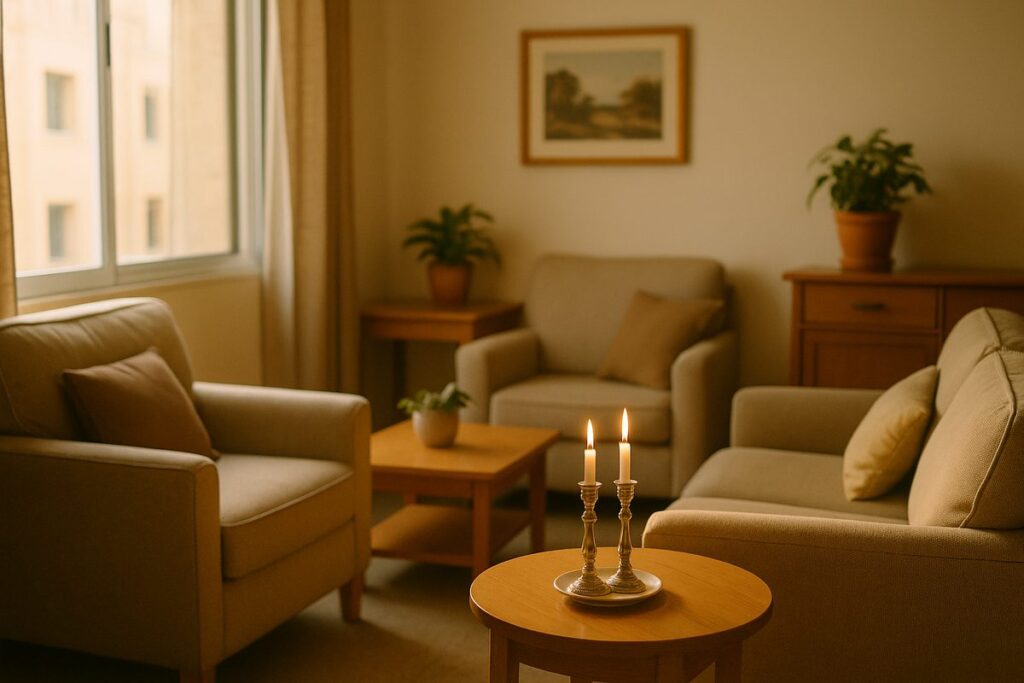
For an observant Jewish woman, a general sober living home creates a real dilemma: keeping kosher, observing Shabbat, and staying connected to community life are not automatic in a secular setting, and negotiating them one day at a time adds stress to an already difficult transition. A kosher, Jewish-centered supportive living environment removes that negotiation. Kosher food, a Shabbat-observant household rhythm, and a community of other Jewish women in recovery are part of daily life rather than something a woman has to arrange around a secular schedule.
In South Florida, kosher supportive living for women is available through Yacholet, a Jewish nonprofit in Hollywood, Florida. Yacholet is not a clinical provider. It offers a warm Jewish home environment, mentoring, life-skills development, and Jewish community connection for eligible women, while clinical treatment is provided separately by a licensed outpatient program.
How clinical treatment and supportive living work together
Supportive living and clinical treatment are two different things that work best in coordination. IKANN Wellness is a fully Jewish women’s mental health and addiction recovery center in Fort Lauderdale, at 2901 Stirling Road, Suite 203, providing outpatient levels of care: a partial hospitalization program, an intensive outpatient program, and a women’s night IOP. IKANN Wellness provides the clinical and therapeutic services. For eligible women, when appropriate, Yacholet may provide the supportive living piece, so a woman can attend outpatient treatment during the day and return to a kosher, Jewish-centered home in the evening.
Because PHP and IOP are in-person outpatient programs, a woman needs to be physically present in South Florida to attend. Supportive living through Yacholet is one way families from outside the area make that possible without a woman needing to navigate an unfamiliar, secular household during an already difficult time.
Cost and insurance
Sober living costs vary by home, location, and level of amenities, and are typically billed separately from clinical treatment. Clinical treatment costs depend on the specific insurance plan and level of care. Rather than relying on general claims about coverage, the most reliable step is a direct benefits verification. IKANN Wellness can verify insurance benefits for clinical treatment before a family makes a commitment.
Common warning signs of a poor fit
Not every sober living arrangement delivers what it promises, and a few patterns are worth treating as red flags. Be cautious of a home that cannot clearly explain its certification status, that pressures a family to sign a long-term commitment before a woman has even visited, or that has high turnover among residents and little visible structure. Homes that discourage contact with a woman’s outside clinical team, rather than coordinating with it, tend to isolate residents instead of supporting their recovery. A short visit and a direct conversation with current or past residents, when possible, often reveals more than a website or a sales call.
Questions worth asking before you decide
- Is this home certified, and who operates it?
- Does it accommodate kosher food and Shabbat observance, or would that need to be arranged separately?
- How does it coordinate with a woman’s outpatient clinical program?
- What is the full cost, and what happens if a longer stay is needed?
- What is the house culture like day to day?
What daily life looks like in supportive living
Structure is one of the biggest differences between a productive stay in supportive living and one that does not help much. A typical day includes set wake times, house responsibilities, attendance at outpatient treatment, and some form of evening check-in or house meeting. This structure is not about restriction for its own sake. Early recovery is a vulnerable period, and a predictable daily rhythm gives a woman fewer unstructured hours where old patterns could resurface. In a kosher, Jewish-centered home, that same structure includes shared Shabbat meals and a household calendar built around Jewish holidays, so recovery and Jewish life move on the same schedule instead of competing for a woman’s time and attention.
How long does supportive living typically last
There is no fixed length that fits everyone. Some women use supportive living for a few weeks while completing a partial hospitalization program, then transition to more independent living as they move into a lighter outpatient schedule. Others benefit from a longer stay, particularly if returning to a previous living situation would put early recovery at risk. The right length is a clinical and practical question, best answered by looking at a woman’s progress in treatment alongside how stable and supportive her next housing option would actually be.
Frequently asked questions
Is sober living the same as treatment?
No. Sober living is substance-free housing, not a clinical program. Most residents attend a separate outpatient treatment program during the day.
Can a woman keep kosher in sober living?
In a general secular home, not automatically. A kosher, Jewish-centered supportive living environment, such as the one available through Yacholet in Hollywood, Florida, builds kosher food and Shabbat observance into daily life.
Does IKANN Wellness operate sober living homes?
No. IKANN Wellness provides clinical mental-health and addiction treatment. Supportive living is provided separately through Yacholet, a Jewish nonprofit, for eligible women when appropriate.
Can a woman attend outpatient treatment while living outside Florida?
No. PHP, IOP, and night IOP require being physically present in South Florida. Supportive living is one option that helps make relocating for treatment more manageable.
How much does sober living cost?
Costs vary by home and are usually separate from clinical treatment fees. Ask each home directly for its current rates and what they include, and confirm in writing before moving in so there are no surprises partway through a stay.
A note on safety
If you or someone you love is in immediate danger or having thoughts of suicide, call or text the 988 Suicide and Crisis Lifeline, or call 911 or go to the nearest emergency room. IKANN Wellness is an outpatient provider. Some situations require medical stabilization or detox at a hospital or residential facility before outpatient treatment can safely begin.
Choosing well
The right supportive living arrangement is one that keeps a woman safe, connected to her clinical care, and, for an observant woman, connected to Jewish life rather than asking her to set it aside. Understanding how sober living and clinical treatment fit together makes that choice much clearer. To learn more about outpatient treatment and how it can coordinate with kosher supportive living through Yacholet, IKANN Wellness can verify insurance benefits and walk your family through the options. Call (786) 504-7626 or visit ikannwellness.com.