
What Is an Eating Disorder PHP?

A Partial Hospitalization Program for eating disorders is the highest level of outpatient care available — sometimes referred to as "day treatment." At IKANN Wellness, our eating disorder PHP provides 5–6 hours of structured clinical programming each day, 5 days per week, including therapeutic meal support, individual therapy, group sessions, nutritional counseling, and holistic healing modalities.
Unlike residential treatment, PHP allows you to return home each evening. This means you can practice the skills you're learning in real time — preparing meals in your own kitchen, navigating your own grocery store, and facing your triggers in your actual environment with the clinical support to process each experience the following day.
Our PHP is designed for women who need more intensive support than our IOP can provide, whether you're stepping down from inpatient care, experiencing an escalation in symptoms, or beginning treatment for the first time with significant clinical needs.
Who Benefits from Eating Disorder PHP?
Our PHP may be the right choice if you are:
- Transitioning from an inpatient or residential eating disorder program and need continued daily structure
- Experiencing medical complications related to your eating disorder that require close monitoring
- Struggling with severe restriction, frequent binge-purge cycles, or other behaviors that significantly impact daily functioning
- Dealing with co-occurring conditions such as depression, anxiety, PTSD, or substance use alongside your eating disorder
- Not making adequate progress in less intensive outpatient treatment
- In need of medication stabilization and ongoing psychiatric oversight
A Day in Our Eating Disorder PHP
Every day in our PHP is thoughtfully structured to address emotional, behavioral, and nutritional recovery:
| Time | Activity |
|---|---|
| 9:00 AM | Morning check-in & mindfulness practice |
| 9:30 AM | Therapeutic breakfast with meal support from clinical staff |
| 10:15 AM | Individual therapy session (3×/week) or process group |
| 11:30 AM | Psychoeducation workshop (body image, emotional regulation, CBT skills) |
| 12:30 PM | Therapeutic lunch with guided meal support |
| 1:15 PM | Nutritional counseling or holistic therapy (yoga, art therapy, equine therapy) |
| 2:30 PM | Group therapy — skills-based or process group |
| 3:00 PM | Evening planning, goal-setting, and daily reflection |
Therapeutic Meal Support — Where Real Recovery Happens
One of the most powerful components of our eating disorder PHP is therapeutic meal support. Eating meals in a clinical setting with trained staff may sound intimidating, but for many women, it becomes one of the most transformative parts of treatment.
During therapeutic meals, our clinical team sits with you, supports you through anxiety and distress, helps you identify and challenge the thoughts that arise around food, and models what a nourishing, balanced meal looks like. Over time, you begin to rebuild trust with your own hunger and fullness cues — skills that will carry you through recovery long after treatment ends.
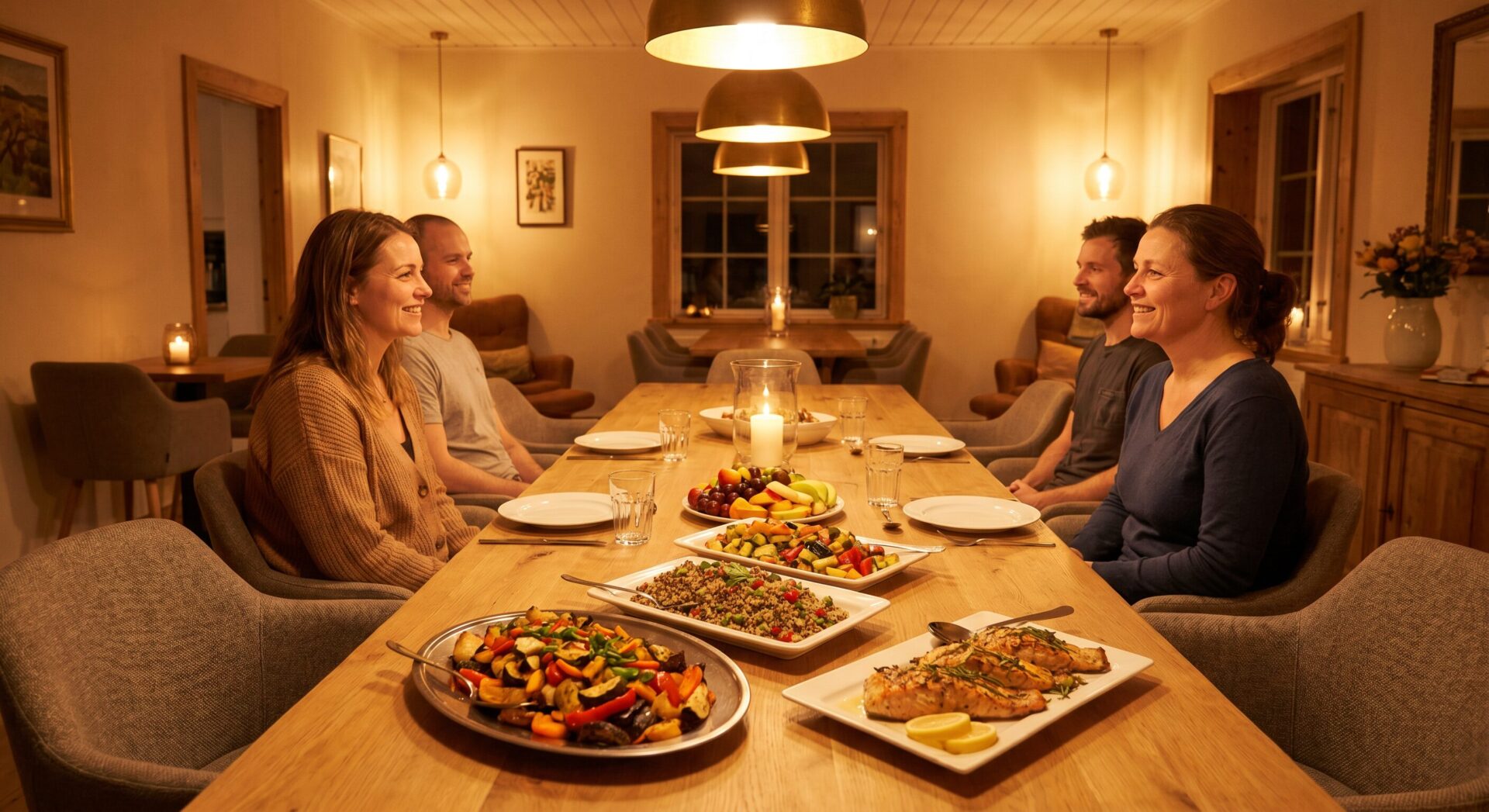
Our registered dietitians create individualized meal plans based on whole-foods principles that are designed to be sustainable and non-restrictive. We don't believe in rigid diets or one-size-fits-all food plans. Instead, we focus on teaching you to nourish your body in a way that feels manageable, flexible, and ultimately freeing.
Meal Support When Every Meal Has Rules
Therapeutic meal support is already one of the hardest parts of eating disorder treatment. Layer kashrus on top of it and the complexity multiplies. Restriction gets disguised as religious observance. Bingeing hides behind the expectation to eat at every simcha. And the constant negotiation between what your body needs and what your kitchen allows creates a level of food anxiety that most treatment centers don't know how to address.
Our meal support program uses kosher food prepared according to halachic standards. Your dietitian understands the difference between a chumra and a clinical restriction. They won't ask you to eat something that violates your kashrus level, and they won't let kashrus become a loophole for avoidance behaviors. That distinction matters.
Shabbos meals, fast days, and holiday eating are addressed directly in treatment planning. If Yom Kippur is approaching, your team prepares for it weeks in advance. If the three weeks or sefirah affect your eating patterns, that's part of the conversation. Recovery doesn't happen in a vacuum, and your religious calendar is part of your clinical reality.
Clinical Modalities in Our Eating Disorder PHP
Addressing Co-Occurring Conditions
Eating disorders seldom exist alone. Our PHP is equipped to treat the conditions that most commonly accompany disordered eating in women:
- Anxiety and panic disorders
- Depression and mood disorders
- Post-traumatic stress disorder (PTSD) and complex trauma
- Substance use and addiction
- Obsessive-compulsive disorder (OCD)
- Self-harm and suicidal ideation
- Body dysmorphic disorder
By treating these conditions simultaneously within our integrated model, we address the root causes driving your eating disorder — not just the symptoms.
The Conditions That Hide Behind "She's Just Stressed"
In frum communities, co-occurring conditions alongside eating disorders often go unrecognized for years. Depression gets attributed to a difficult marriage. Anxiety is explained away as normal for a busy mother. OCD rituals blend into religious observance until nobody can tell the difference. And substance use, when it exists, is the last thing anyone suspects.
Our integrated treatment model addresses all of it simultaneously. Your psychiatrist, therapist, and dietitian communicate with each other so that medication management accounts for your eating disorder, your trauma therapy doesn't destabilize your eating, and your nutritional recovery supports your mental health rather than working against it.
The women in our program often say the same thing: they didn't realize how many separate issues were tangled together until someone finally treated them as connected.
Transitioning from PHP to IOP
Recovery from an eating disorder is a process, not a single event. When you've made sufficient progress in PHP, our clinical team will work with you to create a seamless transition to our Eating Disorder IOP, where you'll continue to receive structured support while gradually increasing your independence. This step-down approach helps ensure that the gains you've made in PHP are solidified and sustainable.
Insurance & Admissions
IKANN Wellness accepts most major insurance plans for eating disorder PHP services. Our admissions team handles insurance verification, prior authorization, and all paperwork — so you can focus entirely on getting well.
To learn more or begin the admissions process, call (786) 504-7626 or email office@ikannwellness.com. We respond to all inquiries within 24 hours.
Frequently Asked Questions — Eating Disorder PHP
How long does the eating disorder PHP program last?
The typical duration is 4–6 weeks, though treatment length is individualized based on your progress and clinical needs. Some women may require a shorter or longer program depending on their circumstances.
What is therapeutic meal support?
Therapeutic meal support involves eating meals in the treatment setting with trained clinical staff who provide guidance, emotional support, and help you challenge disordered thoughts around food. It's one of the most impactful components of eating disorder PHP.
Can I attend PHP while working or going to school?
PHP requires a full-day commitment (typically 9 AM – 3 PM, Monday through Friday), which may not be compatible with a full-time work or school schedule. Many women choose to take a medical leave for the duration of PHP. Our IOP program offers more flexibility for those who need it.
Will I see a psychiatrist during PHP?
Yes. Our board-certified psychiatrist is available for medication evaluation, management, and monitoring throughout your PHP participation. Psychiatric care is integrated into your treatment plan.
What happens after I complete PHP?
Most women transition to our Eating Disorder IOP for continued support, followed by individual outpatient therapy. We create a comprehensive aftercare plan to ensure continuity of care and long-term recovery.
Are all meals in the eating disorder PHP kosher?
Yes. All meals and snacks in our PHP program are prepared according to kosher standards. Our dietitians work within your specific level of kashrus observance to create meal plans that support nutritional recovery without compromising your religious practice.
How does the program handle fast days?
Fast days are addressed proactively in your treatment plan. Your clinical team works with you well in advance to develop a strategy that respects your religious practice while protecting your recovery. For women whose eating disorder makes fasting medically unsafe, we support conversations with your rav and provide clinical documentation when needed.